Pokemon TCG Booster Packs: Which Sets Have the Best ROI?
Most buyers approach Pokémon cards hoping for the sudden dopamine hit of pulling a chase card. Financial investors and serious collectors approach the exact same product from a vastly different angle: risk-adjusted return on investment. Historically, sealed Pokémon TCG products represent one of the most stable alternative assets in the modern collectibles market, consistently outperforming many traditional indices over a five-to-ten-year horizon.
However, not all booster packs are created equal. Buying random lots or loose packs without a strategy often leads to dead capital. To generate consistent returns, you need to understand print runs, set liquidity, pull rates, and the critical difference between the expected value (EV) of ripping a pack versus the long-term premium of holding it sealed.
This guide breaks down exactly how to evaluate Pokémon TCG booster packs as financial assets, compares the top-performing sets available today, and outlines how to protect your portfolio from counterfeits and dead inventory.
Quick Navigation (Skip to)

- The Expected Value (EV) vs. Sealed Premium Framework
- Top Sets for ROI: A Comparative Analysis
- Product Specifications: What's Exactly in the Box?
- Player vs. Collector: Aligning Packs with Your Strategy
- Where Did You See a Lower Price? The Counterfeit Trap
- Frequently Asked Questions
- Next Steps for Your Portfolio
The Expected Value (EV) vs. Sealed Premium Framework
Before analyzing specific expansions, we must establish how a booster pack is valued. The financial health of a booster pack relies on two competing metrics: Expected Value (EV) and the Sealed Premium.
Expected Value (EV) is the mathematical average of the raw cards you are likely to pull from a single pack. If a pack costs $4.50 at retail, but the mathematical probability of the pulls yields only $1.20 in raw card value, ripping the pack destroys $3.30 in equity. As a set ages, the EV typically drops because the market floods with raw cards, yet the price of the sealed pack simultaneously rises.
The Sealed Premium is the added value the market assigns to the potential of the pack. The longer an expansion is out of print, the higher the sealed premium climbs. Investors who hold a sealed pokémon trading card game booster box are capitalizing on this exact premium, avoiding the volatility of raw card grades entirely.
When you use PokéInvest's proprietary Hidden Gems Score™ to assess an asset, we track both of these metrics. Sets with high liquidity (frequent trades) and high chase-card values almost always develop the strongest Sealed Premiums over a five-year hold.
Top Sets for ROI: A Comparative Analysis
To make data-driven decisions, you must compare current market sets against out-of-print giants. Here is how the top tiers break down as of May 2026.
1. The Gold Standard: Sword & Shield - Evolving Skies
Evolving Skies remains the blueprint for modern TCG investment. The set is heavily anchored by the "Moonbreon" (Umbreon VMAX Alternate Art), arguably the most iconic card of the Sword & Shield era.
- Investment Angle: Pure Sealed Hold.
- The Math: Because the pull rates for the top alternate arts are notoriously difficult (averaging 1 in 280+ packs), the EV of an open pack is extremely poor. However, the exact same difficult pull rates drive immense demand for the sealed packs. Ripping this set is a statistical trap; holding it sealed is a proven, high-ROI strategy.
2. The Nostalgia Play: Scarlet & Violet - 151
The 151 expansion targets a different market psychological trigger: aggressive millennial nostalgia. By focusing exclusively on the original Kanto Pokémon with updated, stunning Illustration Rares, this set pulled thousands of dormant collectors back into the hobby.
- Investment Angle: Mid-term flip or long-term grading hold.
- The Math: The EV of ripping 151 was remarkably high during its initial retail run, meaning buyers were often breaking even or profiting by grading the Illustration Rares. Today, loose packs are climbing in price. If you hold raw "hits" from this set, running them through the PokéInvest PSA grading ROI calculator is highly recommended before listing them.
3. The Current Entry Point: Scarlet & Violet - Perfect Order
For those looking to enter at MSRP, May 2026 brings fresh opportunities. As officially detailed in the Check Out Every Pokémon TCG Product Release in May 2026 announcement, Perfect Order represents the latest meta shift.
- Investment Angle: Short-term flipping and early grading.
- The Math: Early analysis of pack openings, such as the widely circulated Opening 100x Pokémon Perfect Order breakdowns, indicate high pull rates for Special Illustration Rares. When a set is brand new, early access to graded population reports allows flippers to capitalize on FOMO pricing. Buy at retail, grade the top hits immediately, and sell before the market population swells.
Comparison Decision Matrix
| Expansion Set | Best For | Risk Level | Target Hold Time | Primary Value Driver |
|---|---|---|---|---|
| Evolving Skies | Long-term Sealed | Low | 5+ Years | Extreme scarcity of chase cards |
| S&V 151 | Grading & Sealed | Medium | 2-5 Years | Nostalgia & Illustration Rares |
| Perfect Order | Short-term Flip | High | 0-6 Months | Meta relevance & early pop reports |
| Crown Zenith | Loose Pack Holds | Low | 3-5 Years | Exceptional pull rates, fun to open |
Product Specifications: What's Exactly in the Box?
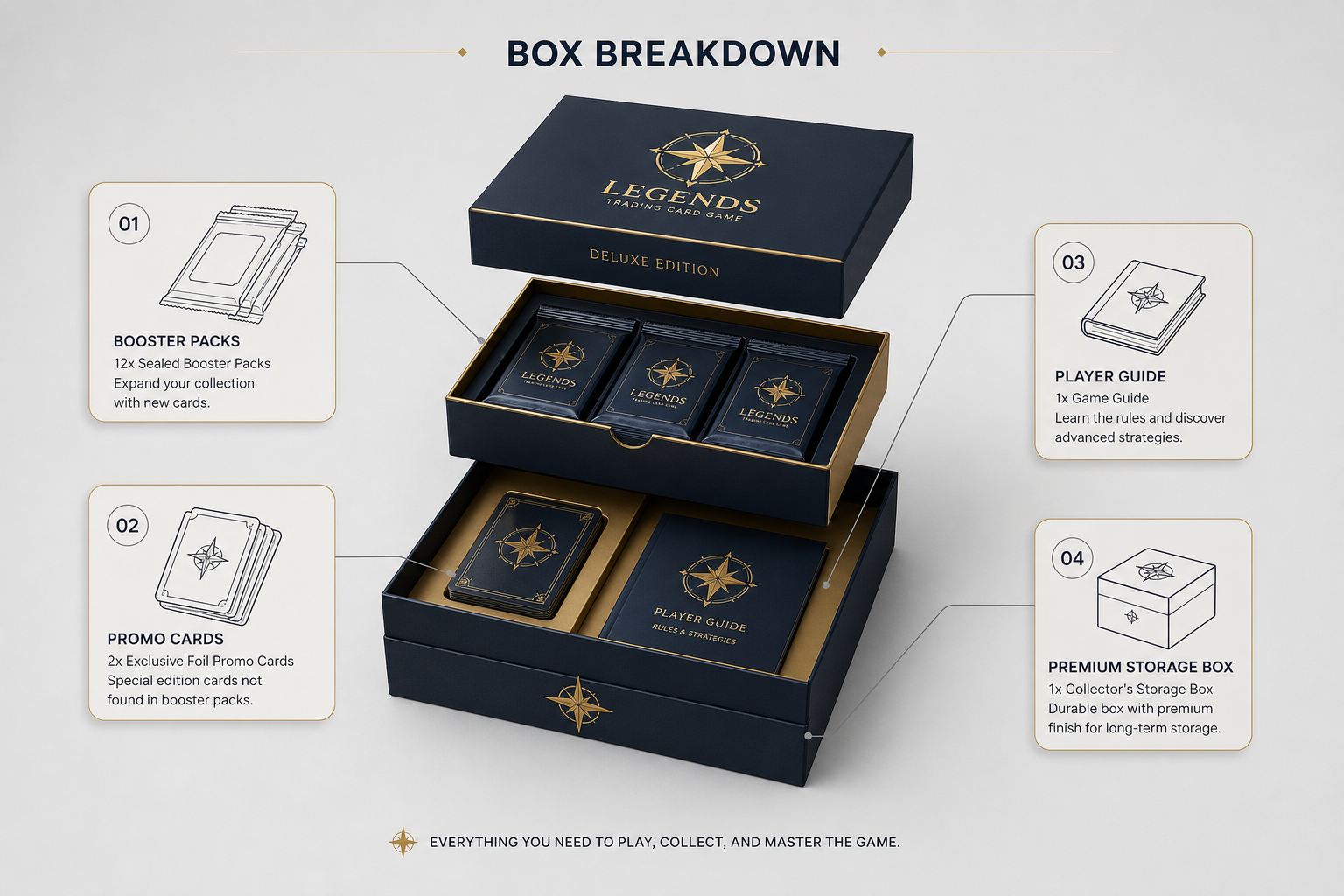
If you are scaling a TCG operation, you need absolute clarity on the exact specifications of the product you are handling. The official Pokémon Company standardizes these components across their modern retail releases, which you can verify through their All expansions database.
Here is the exact anatomy of a modern standard Scarlet & Violet era booster pack:
- Total Playable Cards: 10 standard game cards.
- Foil Guarantee: 3 foil cards per pack (typically two reverse holos and one standard holo rare, or better).
- Energy: 1 Basic Energy card (separate from the 10 game cards).
- Digital Asset: 1 Code Card for Pokémon TCG Live.
Older Sword & Shield packs differ slightly, guaranteeing only one reverse holo and one rare (which was not always a foil). Understanding these subtle shifts is critical when valuing unweighed loose packs.
Player vs. Collector: Aligning Packs with Your Strategy
The most common error new buyers make is purchasing the wrong product for their specific goal. The market is split into two factions: Players constructing meta decks, and Collectors/Investors maximizing portfolio value.
The Player's Path
Competitive players need specific, functional cards to build standard legal decks. Buying random single pokemon card packs is a highly inefficient way to build a deck. Instead, players should prioritize purchasing singles on the open market or buying a pre-constructed pokemon battle decks to secure guaranteed trainer staples and energies.
The Investor's Path
Investors rely on scarcity, mint-condition grading, and time. If you are an alternative asset manager treating these items like stocks, you should rarely, if ever, open the product. Your priority should be acquiring factory-sealed boxes directly from distributors or trusted sources like the Booster Packs section of the official Pokémon Center to ensure chain of custody. Storing a pokemon cards tin or a sealed booster box in a climate-controlled environment provides a far more reliable return than chasing a 1-in-300 pull.
Where Did You See a Lower Price? The Counterfeit Trap
When navigating massive online retailers, it is easy to get lost. You often have to shift through unrelated categories—clothing, shoes, jewelry—just to find authentic games and trading cards. This broad marketplace structure creates a haven for counterfeiters and resealers.
If you see third-party listings for 3 Booster Packs (Random packs) heavily discounted below market rate, your immediate reaction should be skepticism. If the price of an out-of-print pack looks too good to be true, it is usually a compromised asset.
A 3-Step Checklist to Verify Pack Authenticity:
- Examine the Crimp Style: Authentic modern Pokémon packs have a specific, vertical crimp line at the top and bottom seals. Counterfeiters often use cheap heat sealers that leave horizontal lines, a jagged "sawtooth" cut, or melted plastic residue.
- Check the Color Saturation: Fake packs frequently feature washed-out colors or slightly blurred text on the back. The trademarked Pokémon logo should be razor-sharp with a distinct yellow-to-blue gradient.
- Inspect for Pinholes and Glue: Resealers carefully open the back flap, extract the valuable rare card, replace it with bulk, and reseal the pack with clear adhesive. Always lightly tug the back flap of loose secondary-market packs. If you see stringy glue residue or tiny pinholes (used to push air out during a reseal), the item is tampered with.
For accurate, live pricing baselines, always reference dedicated aggregate platforms. You can check the current market spread by looking at TCGplayer: Shop Pokemon Cards or utilizing PokéInvest's live market tracker to ensure you are paying a fair premium.
Frequently Asked Questions
Which Pokemon booster pack has the best pull rates right now?
In the current Scarlet & Violet era, sets like Paldean Fates and the upcoming Perfect Order feature highly favorable pull rates for Special Illustration Rares compared to late-era Sword & Shield sets. Furthermore, special "holiday" sets (like Crown Zenith or 151) historically feature higher hit rates because they do not contain standard booster box distributions, relying entirely on ancillary products like Elite Trainer Boxes and tins.
How many cards are in a standard TCG booster pack?
A standard English Pokémon TCG booster pack contains 10 playable game cards, plus 1 basic Energy card and 1 code card for the digital client. Within those 10 game cards, you are guaranteed at least three foil cards in modern Scarlet & Violet sets.
Are 3-pack random blisters worth the investment?
Generally, no. Random lots often consist of leftover inventory from sets with low demand, or "dead" packs that have been mapped or weighed from loose boxes. As an investor, you want targeted exposure to specific, high-demand sets rather than a randomized assortment of low-tier inventory.
Next Steps for Your Portfolio
Treating Pokémon cards as an alternative asset class requires moving away from the emotional thrill of ripping packs and adopting a data-first mentality. Whether you are holding sealed booster boxes of Evolving Skies or flipping the newest Perfect Order singles, success relies on timing your entry and exit points accurately.
To optimize your strategy:
- Log into your PokéInvest dashboard and input your current sealed inventory to activate 30-day value change reporting.
- If you have loose raw cards you are considering grading, run them through our PSA grading ROI calculator to determine if the expected grade warrants the upfront cost.
- Use our Oracle AI data assistant to query live natural language trends, such as asking, "What is the current Hidden Gems Score™ for Scarlet & Violet 151 sealed booster bundles?"
Stop guessing on random pack lots. Start tracking your collection like a true financial portfolio.
PokéInvest
Pokemon Card Investing
Related Posts

7 Rare Pokemon Cards With High ROI Potential (2026)
Discover 7 rare Pokémon cards with high ROI potential in 2026. Learn how to track values, assess grading profitability, and build a high-yield TCG portfolio.
Read morePokémon Card Values: 3 Tools for Precise Market Data
Discover how to accurately value your Pokémon cards using precise market data. Learn to use 3 essential tools, track portfolio ROI, and calculate grading margins.
Read more