7 Signs a Local Card Shop Is Actually Ripping You Off
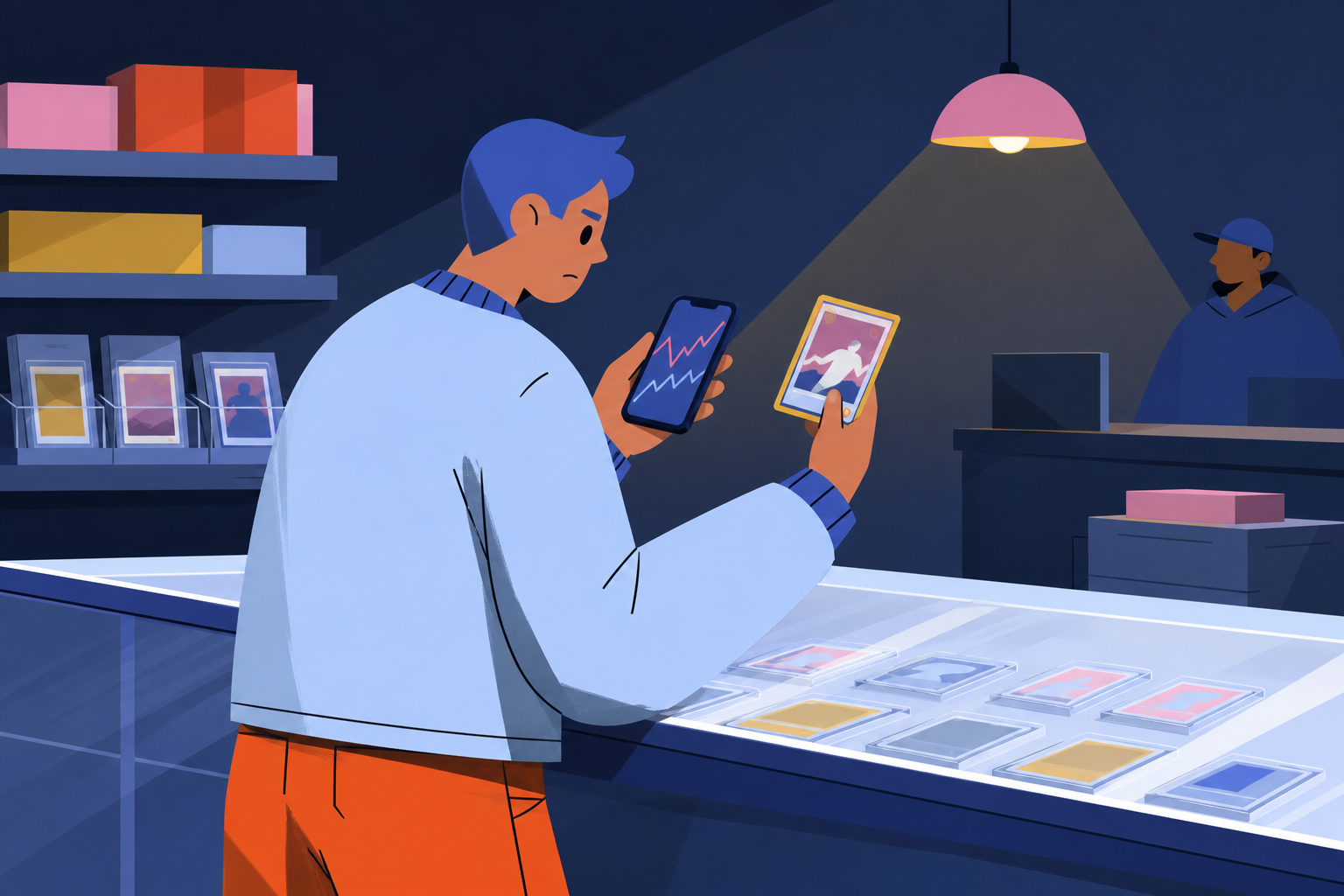
Walking into a local card shop should be an exciting experience. Whether you are hunting for vintage English Pokémon sets released in the late 90s, tracking down the latest sealed cases, or looking for specific raw singles to send off for grading, the physical storefront remains a cornerstone of the hobby. But as trading cards have evolved into a legitimate alternative asset class, the informational gap between casual hobbyists and seasoned store owners has widened.
The reality is that not all card game stores operate with the same ethical standards. While top-tier shops function as community hubs offering fair market liquidity, others exploit asymmetric information. They capitalize on outdated price knowledge, obscure their buy-list margins, and mask the true condition of their raw singles.
If you treat your collection as a financial portfolio, you cannot afford to operate on trust alone. You need data. Here are seven red flags indicating a local shop might be extracting your equity, along with the data-driven strategies you can use to protect your assets.
1. Wildly Inflated Prices on Fresh Releases
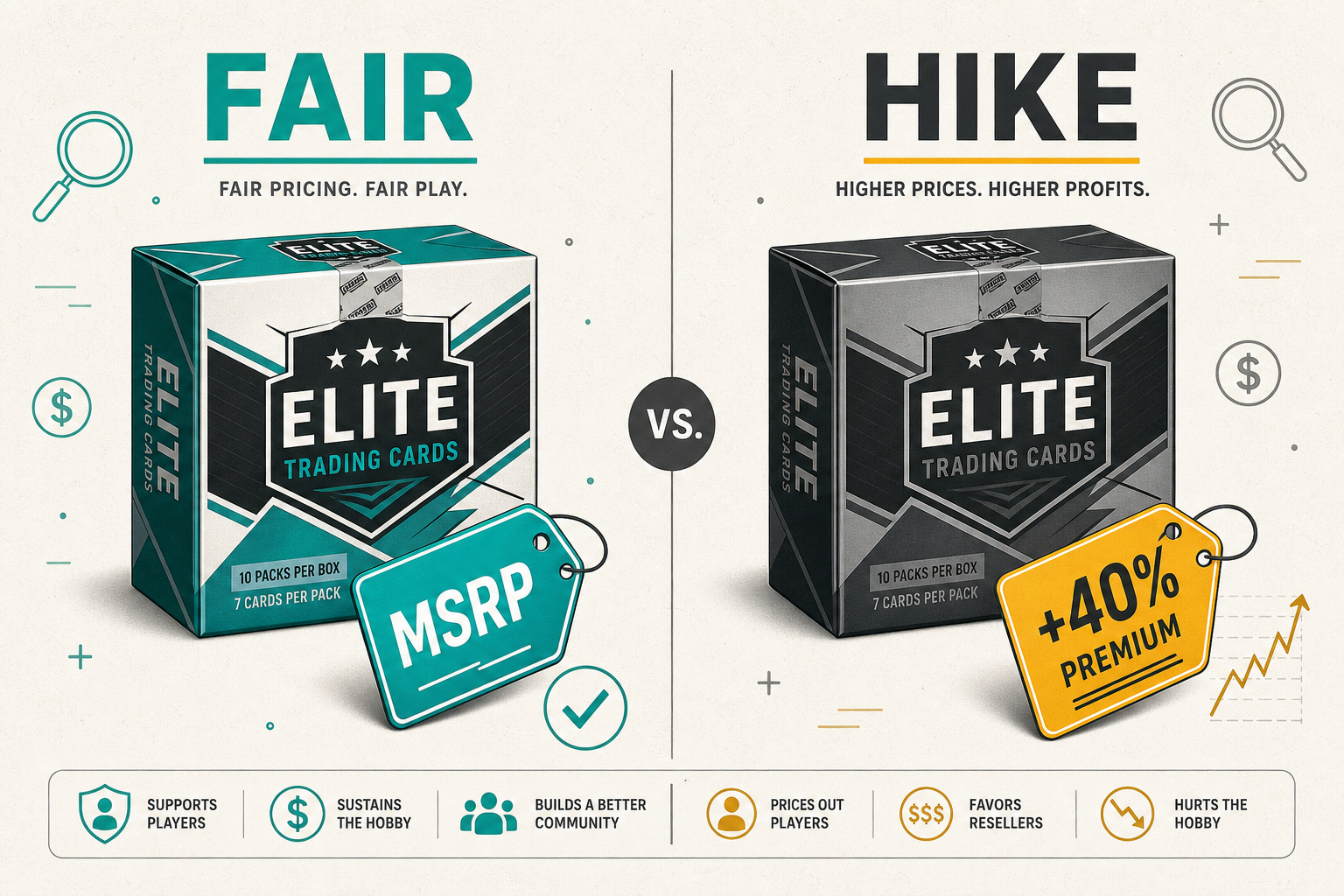
The most common tactic used by exploitative shops involves the manipulation of "freshness." When new trading card sets drop, demand temporarily outpaces supply. Reputable shops rely on standard distributor allocations and sell factory sealed boxes, cases, and packs at or reasonably close to the Manufacturer's Suggested Retail Price (MSRP).
Shady operations, however, treat new releases like a secondary market flip on day one. They actively monitor online marketplaces and immediately hike the price of new booster boxes the moment a chase card begins trending online.
The Fix: Compare local prices against established online volume dealers. Platforms like Dave & Adam's Card World offer a reliable baseline for what newly released cases and boxes should cost. If your local shop is charging a 40% premium on a standard set currently in active print, they are taking advantage of local foot traffic that doesn't know any better.
2. The "Blind" Buy-List for Singles
Selling your cards back to a shop is the ultimate test of their integrity. A legitimate tcg store expects to make a profit on your singles—they have overhead, staff, and inventory holding costs. However, the margin should be standardized and transparent.
If you bring in a high-value graded slab or a chase single and the owner simply looks at it and says, "I'll give you $40," without referencing live market data, walk away. This is a blind buy-list. It relies on the seller being desperate for cash or ignorant of the asset's live market value.
The Standard Local Buy-List Framework
A fair shop will pull up a live pricing aggregate (like the data found on TCGplayer) and apply a clear mathematical percentage based on liquidity:
| Asset Type | Typical Shop Payout | Why This is Fair |
|---|---|---|
| High-Demand Singles ($100+) | 65% - 75% of Market | Highly liquid, fast turnover for the shop. |
| Mid-Tier Singles ($20 - $99) | 50% - 60% of Market | Moderate holding time; requires capital lockup. |
| Bulk Holos/Rares ($1 - $19) | 30% - 40% of Market | High labor to process, list, and store. |
| Graded Slabs (PSA/BGS 9/10) | 70% - 80% of Market | Pre-authenticated, highly liquid alternative asset. |
Note: High-volume flippers managing large portfolios should use PokéInvest’s centralized hub to check live market prices and 30-day value changes before accepting any local buy-list offer. Knowing the exact valuation gives you the leverage to negotiate.
3. Selling Retail Formats at "Hobby" Prices
This tactic frequently bleeds over from the sports card world into Pokémon. In sports (baseball, basketball, and football), manufacturers print distinct "Hobby" and "Retail" versions of the same set. Hobby boxes guarantee specific hits, autographs, or exclusive parallels, making them significantly more valuable. Retail formats (blasters, mega boxes) found at big-box stores do not carry these guarantees.
Some local shops will buy out retail inventory from local big-box stores and mark them up to near-Hobby prices on their shelves, hoping a buyer doesn't understand the difference in pull rates. In the Pokémon TCG, this manifests as pricing loose blister packs or Elite Trainer Boxes (ETBs) at a premium simply because the standard booster boxes are sold out.
Before you buy, verify the exact SKU and historical performance of the product. An authentic shop will clearly delineate their inventory and price it according to the specific format's hit probabilities.
4. The "Dead Box" Loose Pack Trap
Buying loose packs from a partially opened booster box carries inherent risk, but shady shops weaponize this risk against casual collectors.
Card sets are seeded with specific hit ratios. If a shop owner breaks a fresh booster box, sells five packs, and the buyer pulls the "case hit" or top alternate art card, the rest of the box is mathematically unlikely to contain another high-tier asset. A reputable shop will often discount the remaining packs, use them for promotional giveaways, or clearly inform the community that the primary chase card is gone.
An exploitative shop will leave those "dead" packs on the shelf at full premium price, knowing the buyers have virtually zero chance of a meaningful return. If you want a one-of-a-kind unboxing experience, buy factory sealed boxes or cases from trusted vendors like Midwest Cards rather than gambling on loose packs from an unknown source.
5. Aggressive or Murky Return Policies on Sealed Product
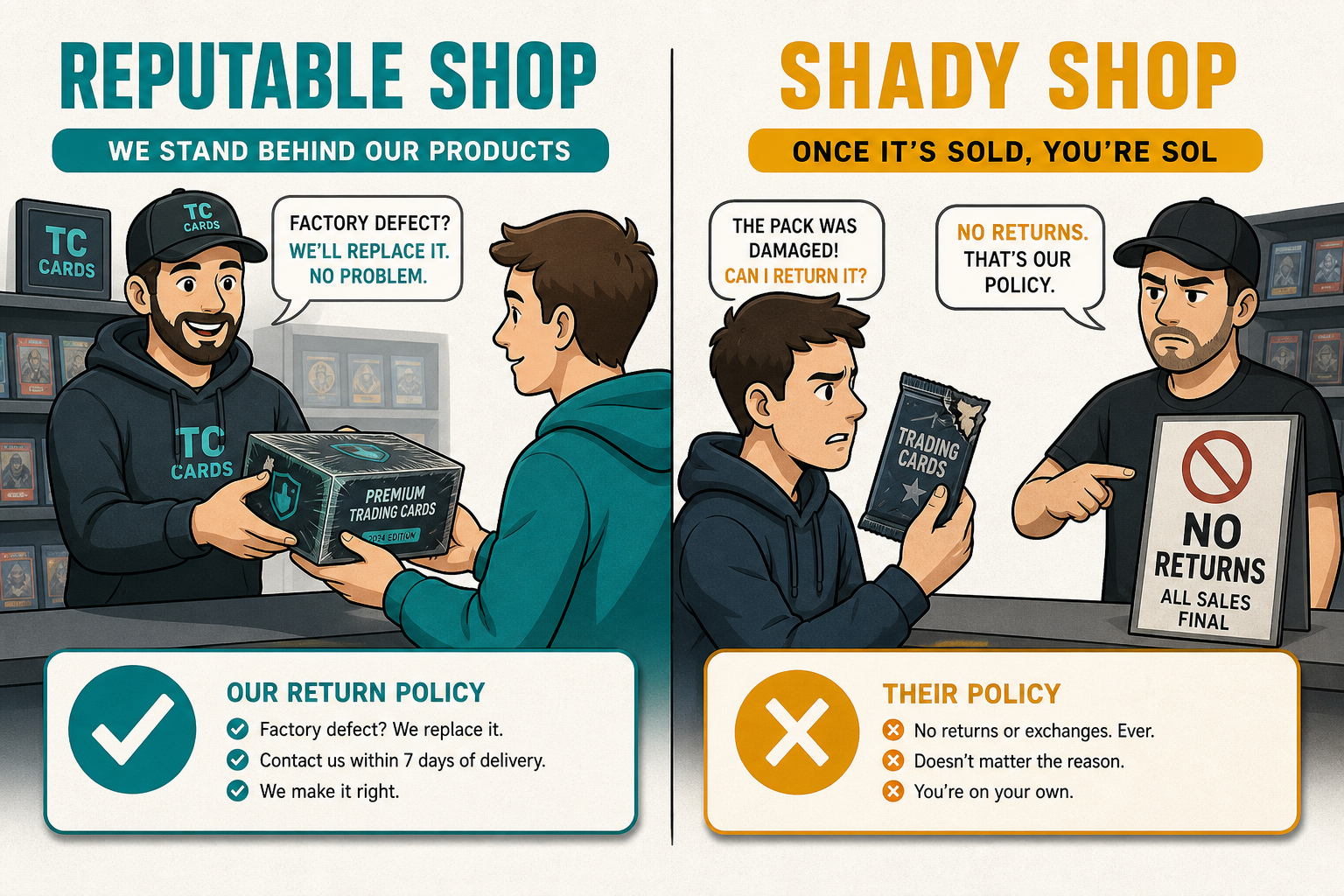
Let’s address the elephant in the room: standard returns on trading cards are virtually impossible. Because of "pack searching" (weighing or manipulating packs to find holos) and resealing, no reputable store can accept a return on a sealed product once it leaves their line of sight.
However, a massive red flag is a shop that refuses to help you if the product has a genuine factory defect. If you open a factory-sealed box inside the store and the cards are crimped, missing rares, or clearly tampered with from the distributor level, a good shop acts as your advocate. They will replace the product and handle the manufacturer claims with The Pokémon Company, Topps, or Panini themselves. Shady shops will point to a "No Returns" sign and tell you you're on your own.
6. Treating "Lightly Played" as "Near Mint"
For investors looking to identify high-ROI opportunities by grading raw singles, condition is everything. A card might have a massive potential profit margin as a PSA 10, but if it comes back a PSA 8, you could lose money.
Many local shops overgrade their own inventory. They will display a card in the "Near Mint" (NM) case, charging NM market price, even when the card has visible whitening on the back edges, surface scratching, or centering issues.
How to protect yourself:
- Always ask to take the card out of the display case.
- Inspect it under a high-quality light source, checking the surface at an angle.
- Use PokéInvest’s PSA grading ROI calculator. Plug in the raw price the shop is asking. If the card looks closer to a PSA 8, calculate the ROI for an 8. If the math doesn't work, do not pay NM prices.
7. Zero Community or Loyalty Perks
Top-tier card shops survive by building a community of dedicated hobbyists. They offer early-access notifications for rare drops, structured community trade nights, and loyalty programs that reward regular buyers.
If you frequently search for "pokemon cards nearby" and end up at a shop that treats every transaction as a purely transactional, zero-sum game, you are likely overpaying. Shops that view customers solely as walking wallets rarely pass down wholesale discounts or offer fair trade-in value. They extract maximum immediate profit because they do not prioritize long-term retention.
Bulletproofing Your Local Buying Strategy
To safely navigate the secondary market, you must treat your collection as an alternative asset class. Before walking into any physical storefront, run your inventory and targets through a data-driven system.
- Run a Market Check: Use PokéInvest's centralized hub to check the 30-day value change reporting on the cards you intend to buy or sell. Knowing the exact trajectory of an asset prevents you from buying at the top of a hype cycle.
- Leverage AI for Edge Cases: If you are hunting for specific trends or need to know the population report of a card you found in a local case, use Oracle AI to query the data in real-time.
- Target Undervalued Assets: Don't just look at what the shop is displaying in the front case. Use the Hidden Gems Score™ to identify under-the-radar cards sitting in their bulk boxes or binder pages. This is where true high-volume flippers make their margins—by knowing the data better than the shop owner.
Frequently Asked Questions
How do I know if a local shop's prices on singles are fair?
Fair retail pricing on raw singles should closely mirror the "Market Price" or "Low" verified listings on major aggregate platforms. If a shop consistently prices their raw, ungraded singles 10-20% above online market averages without guaranteeing condition, they are relying on convenience fees to overcharge you.
Should I ever buy loose packs from a local store?
If you are a serious investor, avoid loose packs unless you are buying them strictly for the fun of a low-stakes unboxing experience. The highest probability of a positive ROI comes from factory-sealed boxes and cases where the hit ratios have not been compromised.
How can I negotiate better buy-list prices locally?
Bring organized, structured data. Instead of handing over a stack of unsorted cards, present your assets with a printed or digital spreadsheet showing current market values and 30-day trends. Offering to take "store credit" rather than cash will also typically net you a 15-25% higher return from most reputable pokemon card shops.
Next Steps for the Serious Investor
You wouldn't buy traditional stocks without looking at a ticker, and you shouldn't buy alternative assets without live data. Before you plan your next trip to a local shop, organize your current inventory using PokéInvest’s collection management system. Set personalized price alerts for your chase cards, so when you finally see one sitting in a glass case, you know exactly what it's worth down to the penny.
PokéInvest
Pokemon Card Investing
Related Posts
7 Rare Pokemon Cards With High ROI Potential (2026)
Discover 7 rare Pokémon cards with high ROI potential in 2026. Learn how to track values, assess grading profitability, and build a high-yield TCG portfolio.
Read morePokémon Card Values: 3 Tools for Precise Market Data
Discover how to accurately value your Pokémon cards using precise market data. Learn to use 3 essential tools, track portfolio ROI, and calculate grading margins.
Read more