Which Card Games Have the Highest Resale Value?
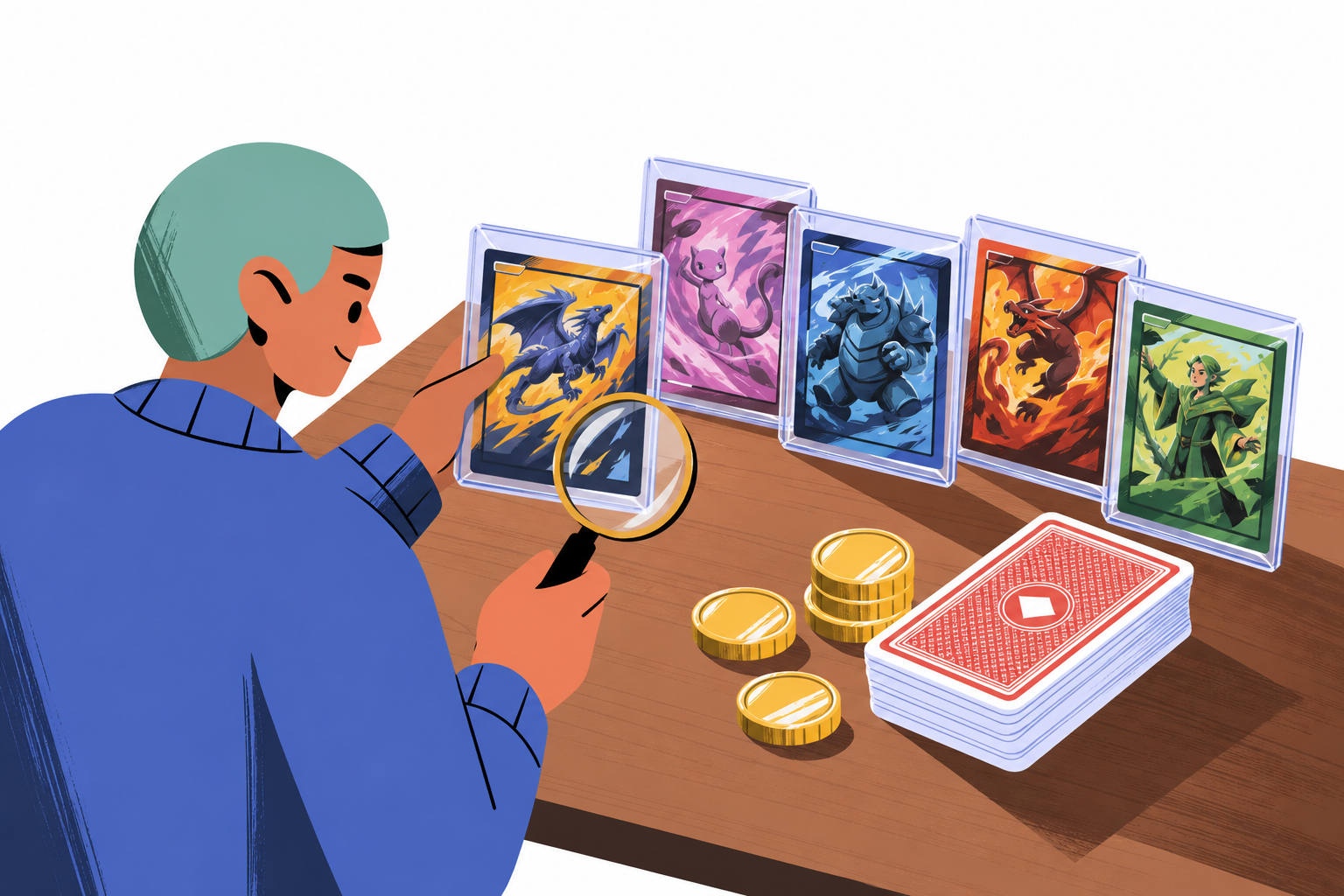
In 2021, a pristine first-edition holographic Charizard sold for over $300,000. Meanwhile, a standard deck of Bicycle playing cards used for weekend poker games remains firmly priced at $4.99. Both are technically pieces of printed cardstock. Both facilitate rule-based interaction. Yet one is treated as a highly liquid alternative asset, and the other is entirely disposable.
For serious financial investors and dedicated hobbyists, the distinction between a game played for leisure and a game held as an asset class dictates where capital flows. If your goal is purely entertainment, the market is saturated with free digital card games and cheap standard decks. But if you treat your binders like a mutual fund, you need to know which intellectual properties command the highest secondary market premiums.
Here is a breakdown of the highest resale value card formats, followed by a look at the free, traditional counterparts that dominate casual play.
The Great Divide: Collectibles vs. Traditional Playing Cards
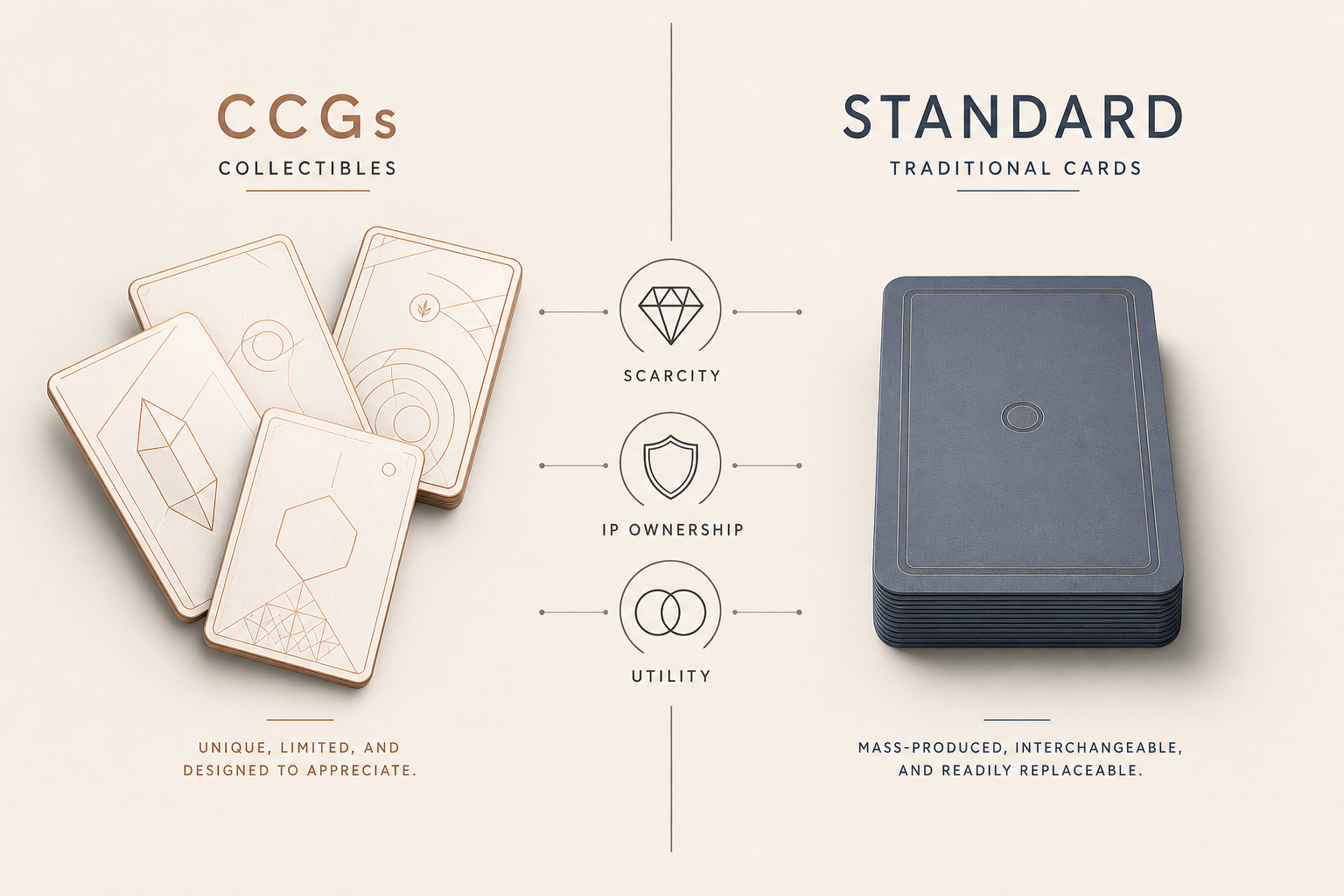
The fundamental driver of resale value in cardboard assets is the intersection of artificial scarcity, intellectual property (IP) popularity, and mechanical utility. This creates a hard divide between two main categories.
Collectible Card Games (CCGs)
Collectible Card Games (CCGs) are the undisputed kings of the resale market. In a CCG, players purchase randomized booster packs to build custom decks. Because powerful or artistically unique cards are printed at lower pull rates, a massive secondary market exists to facilitate singles trading. The value of these assets fluctuates based on competitive tournament results, set print runs, and nostalgia.
Traditional Standard Deck Games
Traditional card games rely on a fixed, non-randomized 52-card deck. There is no scarcity within the deck—the King of Spades is exactly as common as the Two of Clubs. Consequently, these games offer incredible utility but zero resale value. Their primary advantage is accessibility; you can play hundreds of distinct games with a single, three-dollar purchase.
Quick Comparison: Asset vs. Utility
| Feature | Collectible Card Games (CCGs) | Traditional Card Games |
|---|---|---|
| Primary Motivation | Investment, Deck-building, Collecting | Social play, Skill-testing |
| Resale Value | Extremely High (Pennies to $100k+) | Zero (Unless antique/historical) |
| Acquisition Model | Randomized booster packs, Secondary singles | Fixed 52-card deck |
| Examples | Pokémon TCG, Magic: The Gathering | Poker, Spades, Rummy |
Top Collectible Card Games (CCGs) by Resale Value
When evaluating which games hold the best financial prospects, three titans dominate the market share.
Pokémon TCG: The Pop Culture ROI Standard
Since its English release in 1999, the Pokémon Trading Card Game has evolved from a schoolyard pastime into a premier alternative asset class. The secondary market is driven less by the actual gameplay and heavily by character popularity, artist credits (like Mitsuhiro Arita or Ken Sugimori), and strict condition grading.
Managing a Pokémon portfolio requires precise data. Because a raw, moderately played card might be worth $15 while a PSA 10 gem mint version of the same card commands $1,500, condition is everything. Investors utilizing PokéInvest's dedicated PSA grading ROI calculator can determine exactly when it is mathematically sound to pay grading fees. By tracking historical performance and utilizing our Hidden Gems Score™, high-volume flippers can spot undervalued raw inventory on eBay before market corrections occur.
Magic: The Gathering (MTG): The Legacy Investor's Choice
Widely considered the original CCG, Magic: The Gathering balances high-value vintage collectibility with intense, gameplay-driven price spikes. MTG's "Reserved List"—a legally binding promise from the publisher never to reprint certain cards—has created a stabilized market for vintage assets like the legendary Black Lotus.
Unlike Pokémon, MTG’s modern resale market is heavily influenced by tournament formats. A card that becomes dominant in the "Modern" or "Commander" formats can spike by 400% overnight, making it a volatile but highly profitable market for those paying close attention to competitive trends.
Yu-Gi-Oh!: The Fast Paced Flipper's Market
Yu-Gi-Oh! holds a unique space in the resale hierarchy. It is one of the most mechanically complex and fast paced card games, meaning its secondary market moves at breakneck speed. Konami, the game's publisher, frequently reprints expensive tournament staples in lower-rarity sets. This creates a predictable "boom and bust" cycle. Smart investors buy high-rarity "Ghost Rares" or "Starlight Rares" for long-term holds, while day-trading short-term competitive staples before the inevitable reprint announcements.
Low-Volatility Formats: LCGs and Simulations
Not all commercial card formats utilize the randomized booster pack model.
Living Card Games (LCGs)
Living Card Games (LCGs) eliminate the randomized "chase" of CCGs. When you buy an LCG expansion, you receive every card in that set. Because there is no artificial scarcity, the secondary market is incredibly flat. While you can occasionally resell out-of-print LCG expansions for a slight premium, they are generally poor financial investments. The value here is purely in the gaming experience.
Simulation Card Games
Sports card simulations and tabletop historical recreations often feature cards, but they function as board game components. Like LCGs, their resale value is capped at the retail price of the complete box.
The Free Alternatives: High Utility, Zero Resale
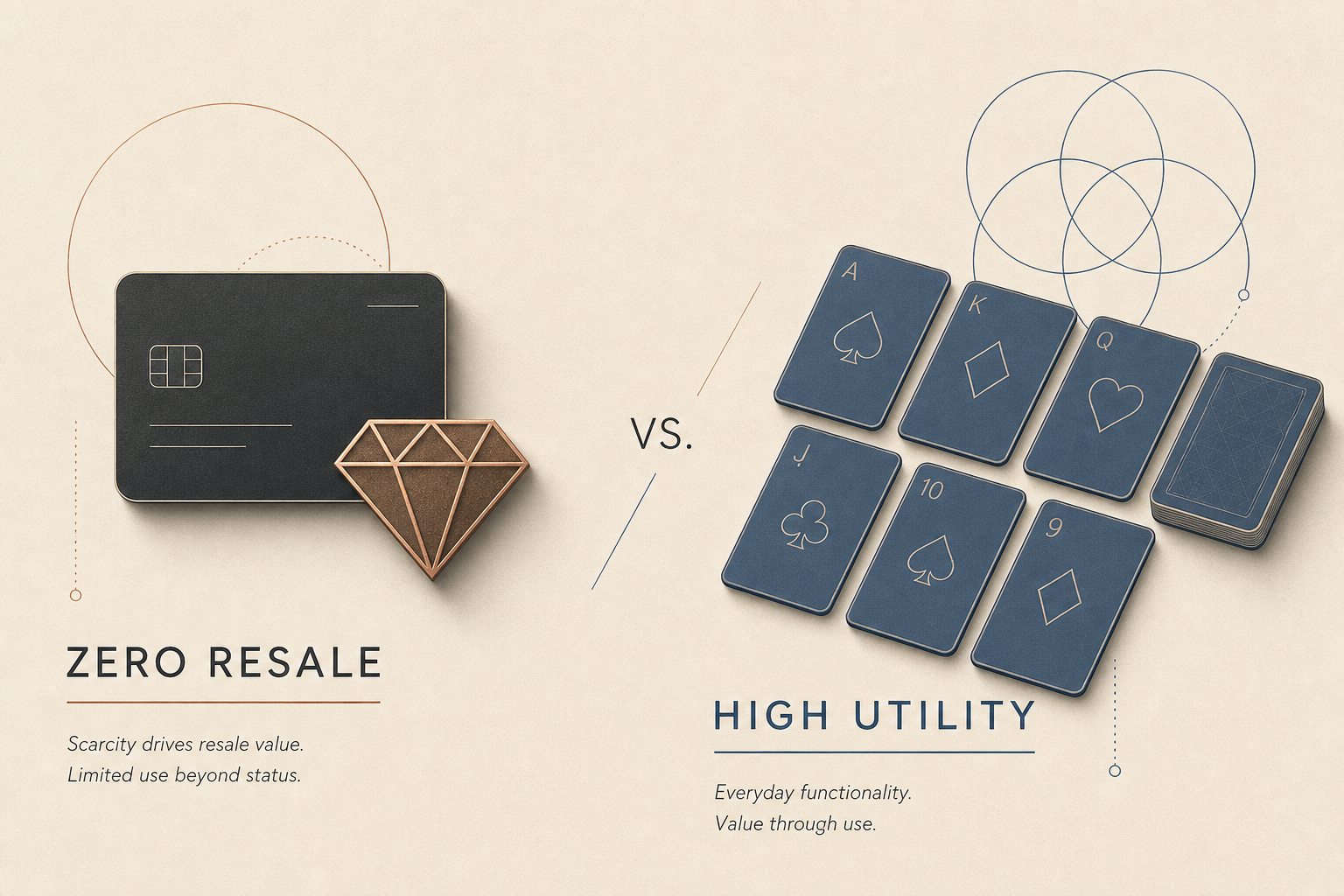
While investors obsess over grading returns, a massive segment of the population searches for card games purely for free entertainment. If you have no interest in financial speculation and simply want to play, traditional playing cards offer the highest ROI in terms of social enjoyment.
Today's digital landscape has aggressively ported these traditional formats to the browser. Platforms like Free Card Games Online | Play Single or Multiplayer and CardGames.io - Play all your favorite classic card games. allow users to experience classic mechanics without spending a dime.
If you want to step away from the financial stress of CCGs, here is how traditional games are classified.
Patience or Solitaire Games
The ultimate solo format. Solitaire games require players to arrange a shuffled deck into a specific layout, usually sorting cards by suit and numerical order. While physical solitaire has a long history, it is now primarily consumed via digital apps. Titles like the Solitaire Card Game - Apps on Google Play have optimized the experience with auto-complete features and daily challenges, offering an instant distraction without the need for physical table space.
Trick-Taking Games
Trick-taking games are the backbone of competitive traditional card play. In these formats, players play one card per round (a "trick"), and the highest card of the leading suit—or a designated trump suit—wins the pile.
- Spades and Hearts: Standard 4-player games reliant on tracking what cards have been played.
- Euchre: A fast, regional favorite played with a stripped-down deck.
- Bridge: The most strategically complex trick-taking game, featuring a dedicated bidding phase.
Shedding Games and Rummy
The objective in a shedding game is simple: be the first person to empty your hand. Meanwhile, the rummy family requires players to form matching sets (melds) of the same rank or sequential runs in the same suit. These mechanics are highly adaptable, serving as the foundation for excellent party card games.
If you are looking for 10 Kid-Friendly Card Games, shedding mechanics (like Crazy Eights) and basic matching games (like Go Fish) are generally the easiest starting points. They require minimal math and rely on simple pattern recognition.
What Drives a Card's Secondary Market Value?
If you are returning your focus to the investment side of the table, you need a framework for evaluating raw assets. Not every holographic Pokémon card is a winner. When you toggle your portfolio views in the PokéInvest dashboard, pay attention to the underlying variables driving the 30-day value changes.
1. Condition and Grading (The PSA Multiplier)
The physical state of a card is the single largest variable in its valuation. A microscopic scratch on the foil or slight whitening on the back corners can drop a card's grade from a 10 to an 8, erasing thousands of dollars in potential profit. Avoid direct physical contact with the foil surfaces of your premium cards, and always use "penny sleeves" before placing them in rigid top-loaders.
2. Market Demand vs. Print Population
A card's rarity symbol only tells half the story. The true metric is the "population report"—the total number of graded copies in existence. A card with a "Pop 50" (only 50 known copies in a PSA 10) will command a massive premium compared to a modern "chase" card with a population of 15,000.
3. IP Relevance and Nostalgia Cycles
Value often cycles based on generational nostalgia. The massive boom in vintage Pokémon prices during 2020 was heavily driven by adults in their 30s acquiring the disposable income necessary to buy the exact cards they couldn't afford as kids in 1999.
Common Pitfalls for TCG Investors
Even experienced alternative asset managers make predictable mistakes when transitioning into the cardboard market.
- Ignoring Transaction Fees: Selling a $100 card on eBay yields roughly $85 after marketplace fees and shipping. High-volume flippers must calculate these margins before acquiring inventory.
- Over-Grading Junk Slabs: Spending $15 to grade a card that sells for $25 in a PSA 9 is a mathematical failure. Use the PokéInvest grading ROI calculator to ensure the expected value outweighs the operational cost.
- Following the Hype Too Late: Buying into a card after it has spiked 300% on social media usually means you are providing exit liquidity for earlier buyers. You must identify trends before they peak. If you use our Oracle AI data assistant, you can query specific set trajectories in natural language to spot lagging indicators.
Finding Niche Value in Traditional Games
While we have established that standard bicycle decks offer no financial return, there is a small, adjacent market for vintage and out-of-print traditional games. Niche communities actively hunt for obscure historical decks. If you look at lists detailing Traditional Card Games that Should be Played More, you will occasionally find a specific, out-of-print European trick-taking deck that commands a minor premium ($50 to $100) on niche auction sites. However, this is closer to antiquing than it is to modern high-liquidity financial investing.
Frequently Asked Questions
Which popular card games have the lowest entry cost?
If you want zero financial commitment, standard 52-deck games are the answer. Any household deck allows you to play hundreds of 2 player card games, from Gin Rummy to War, for absolutely free.
Should I invest in sealed product or single cards?
Both have merits, but they behave differently. Sealed booster boxes from early eras (like the 1999 Base Set) act like blue-chip stocks. They appreciate slowly and steadily because supply continuously dwindles as people open them. Single cards are more volatile, behaving like individual tech stocks—they can spike rapidly based on market trends but carry higher risk.
How do I know if my childhood Pokémon cards are valuable?
Check the bottom of the card for the set symbol, note the year, and assess the condition. Look for "1st Edition" stamps or holographic backgrounds. The easiest method is to input the specific card number (found in the bottom right or left corner) into the PokéInvest dashboard to pull real-time aggregated sales data and a specific subsection history of its price movements.
Next Steps for the Serious Collector
Transitioning from a casual collector to a data-driven investor requires moving away from gut feelings and relying on hard metrics.
- Audit Your Current Inventory: Pull your high-value cards out of old binders. Ensure they are stored in penny sleeves and semi-rigid holders.
- Establish a Baseline: Input your top 20 most valuable cards into the PokéInvest collection management system. Review the initial 30-day value change report to understand your portfolio's current momentum.
- Calculate Grading ROI: Before sending your raw cards to PSA or Beckett, run them through the grading ROI calculator to confirm that the expected grade will actually yield a profit.
- Set Acquisition Targets: Use the premium weekly newsletter to identify undervalued English sets released since 1999, and set personalized price alerts to capture clean eBay deals the moment they are listed.
Whether you are a casual hobbyist looking to fund your next booster box purchase or a high-volume manager treating Pokémon as an alternative asset, the cardboard market rewards those who treat it with the same rigorous analysis as the stock market.
PokéInvest
Pokemon Card Investing
Related Posts
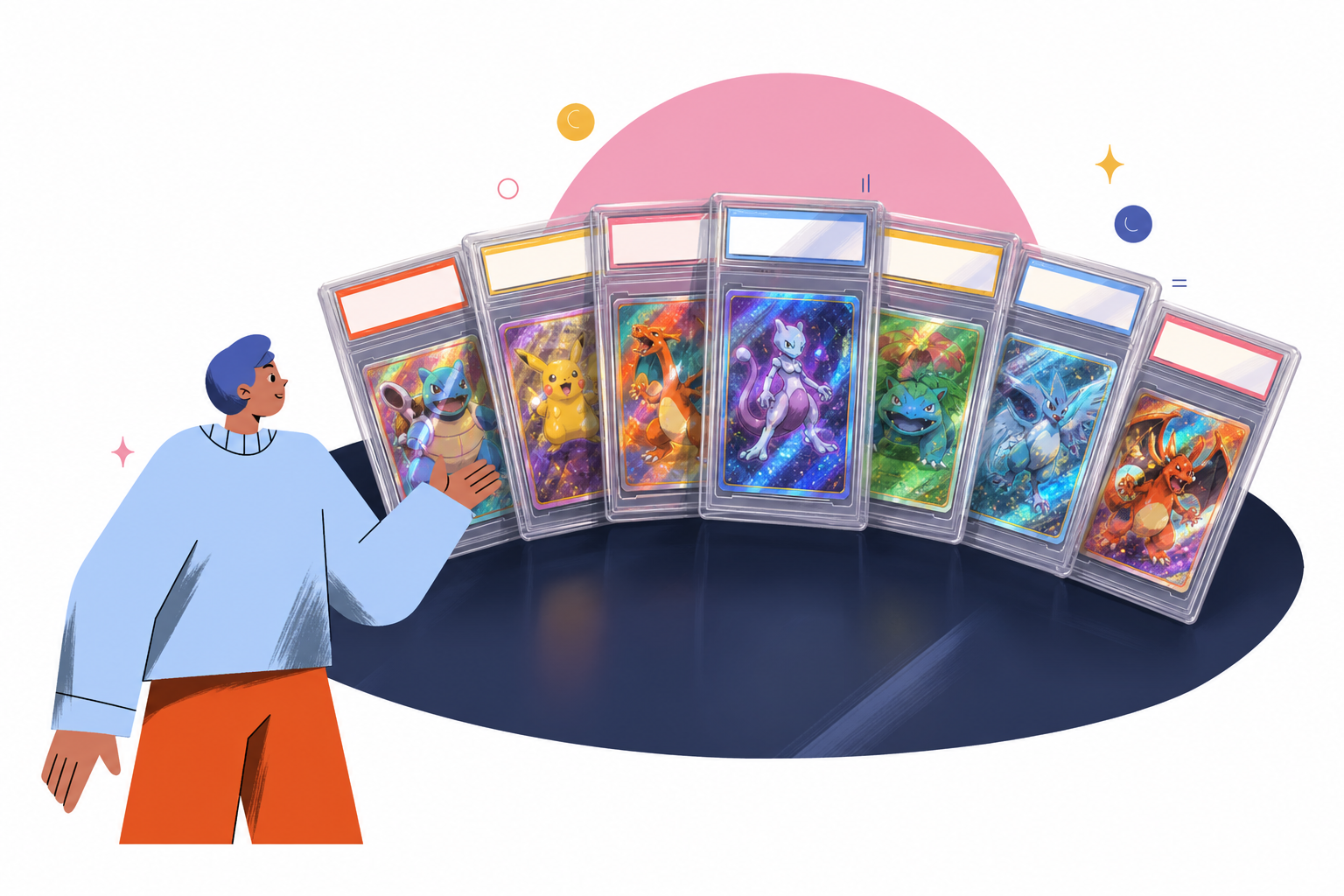
7 Rare Pokemon Cards With High ROI Potential (2026)
Discover 7 rare Pokémon cards with high ROI potential in 2026. Learn how to track values, assess grading profitability, and build a high-yield TCG portfolio.
Read morePokémon Card Values: 3 Tools for Precise Market Data
Discover how to accurately value your Pokémon cards using precise market data. Learn to use 3 essential tools, track portfolio ROI, and calculate grading margins.
Read more